
Regenerative Medicine in Miami
Regenerative treatment works with the repair machinery your body already has. Gables Pain offers platelet-rich plasma (PRP), exosome therapy and shockwave therapy, delivered under image guidance by Dr. Steinberger, for tendon, ligament and joint problems that have not settled with rest, rehabilitation or conventional injections.
What is Regenerative Medicine?
Regenerative medicine is a different starting point from most pain treatment. Rather than masking a symptom with medication or removing tissue surgically, these treatments aim to improve the local conditions for repair: more of the signalling proteins that recruit healing cells, better blood supply, less chronic inflammation in a tendon or joint that has stopped resolving on its own. The materials used are biological, and in the case of PRP they come from the patient's own blood.
At Gables Pain in Miami, the regenerative options are platelet-rich plasma (PRP), which concentrates the platelets and growth factors from a small sample of your own blood; exosome therapy, which uses cell-signalling vesicles studied for their effect on the repair environment; and shockwave therapy, a needle-free treatment that applies focused acoustic pressure waves to a painful tendon or fascia. Stem cell therapy, donor-derived amniotic or umbilical cell products and prolotherapy are not offered at this practice. These treatments are used for problems such as osteoarthritis, tendinopathy, partial tendon tears and degenerative disc and facet pain, usually after conservative care has been given a fair trial.
The evidence is genuinely mixed and worth understanding before you decide. Randomized trials of PRP in knee osteoarthritis and in several tendinopathies have shown improvement in pain and function for many patients, though results vary with the preparation used and the condition treated. Shockwave therapy has the longest track record in insertional tendon problems such as plantar fasciitis and Achilles tendinopathy. Exosome therapy is newer and the evidence for it is still early. Because these treatments work on the body's own healing timeline rather than on a drug's half-life, change is gradual; patients who respond generally notice it over weeks to months rather than days, and some do not respond at all.
Conditions We Treat with Regenerative Medicine
- Osteoarthritis of knee, hip, shoulder, or spine
- Rotator cuff tears and shoulder tendinopathy
- Tennis elbow and golfer's elbow
- Achilles tendinitis and plantar fasciitis
- Degenerative disc disease and facet joint pain
- Meniscus tears and ligament injuries
- Hip labral tears and bursitis
- Chronic tendon and ligament damage
What to Expect
- Aims at repair in the tissue itself rather than at masking the symptom systemically
- PRP is autologous, prepared from a small sample of your own blood drawn at the same visit
- Shockwave therapy is needle-free and delivered in the office over a short series of sessions
- Every injection is placed under ultrasound or fluoroscopic guidance, not by feel
- Downtime is limited, with soreness at the treated site for a few days after an injection being the usual course
- Used for tendinopathy, partial tendon tears, mild to moderate joint arthritis and degenerative disc and facet pain, usually after conservative care has had a fair trial
Our Approach to Regenerative Medicine
Comprehensive Evaluation
Detailed assessment including medical history, imaging review (MRI, ultrasound, X-rays), physical examination, and discussion of your treatment goals to determine if you're a candidate for regenerative therapies.
Customized Treatment Protocol
Selection of the regenerative therapy that suits the tissue involved, whether PRP, exosome therapy or shockwave, based on your condition, its severity and how much repair capacity the structure still has. Injections are placed under ultrasound or fluoroscopic guidance so the material reaches the target rather than the space around it.
Progressive Healing Support
Follow-up monitoring to track tissue healing, rehabilitation guidance to optimize regeneration, and additional treatments if needed. Most patients require 1-3 sessions spaced weeks apart for optimal results.
Benefits
Avoids Surgery and Its Risks
Regenerative medicine offers a non-surgical alternative for many conditions, eliminating risks of infection, anesthesia complications, and lengthy recovery periods.
Aimed at the Tissue
Where a steroid injection reduces inflammation for a time, regenerative treatment is aimed at the repair environment in the tendon or joint itself. How far that goes depends on how much healthy tissue is left to work with.
Durability When It Works
In studies of PRP for knee osteoarthritis and for tendinopathy, patients who do respond often hold their improvement for a year or more. Not everyone responds, so your result is measured at follow-up rather than assumed.
Minimal Downtime
Most patients return to normal activities within days, with only temporary soreness at the injection site as part of the healing response.
What to Expect: Your Regenerative Medicine Journey
Initial Consultation
Comprehensive evaluation including review of imaging studies, physical examination of the affected area, and discussion of your symptoms and goals. Dr. Steinberger will explain which regenerative therapy suits your condition, what a realistic outcome looks like, and what it will cost. Treatment is scheduled at a later visit once any additional imaging is complete and you have had time to decide.
First Treatment (Day 1)
For PRP, blood is drawn and processed while you wait, about 15 to 20 minutes, then injected under image guidance. Exosome therapy is prepared and injected in a single visit without a blood draw. Shockwave needs no needle and no anesthetic, and is delivered in the office in a short session. Injection itself takes 10 to 30 minutes depending on the target. Some soreness at the site is normal for two to five days. We recommend relative rest and avoiding anti-inflammatory medication, which can blunt the healing response.
Weeks 2-8: Active Healing Phase
During this period, the growth factors and cells are actively repairing tissues. You may notice gradual improvement in pain and function, though some patients experience a temporary increase in discomfort around week 2-3 as the healing response ramps up. We'll guide you through appropriate activity modifications and gentle rehabilitation exercises. Follow-up visits allow us to monitor progress and determine if additional treatments are beneficial.
Months 2-6: Tissue Maturation and Long-term Results
New tissue continues to strengthen and mature. Most patients experience their peak improvement between 3-6 months post-treatment as collagen remodels and blood supply improves. Clinical studies show that many patients maintain benefits for 1-2 years or longer. Some conditions may benefit from a second or third treatment spaced 4-8 weeks apart. We'll create a long-term wellness plan including exercises, activity modifications, and follow-up care to maintain your results.
Our Regenerative Treatment Modalities
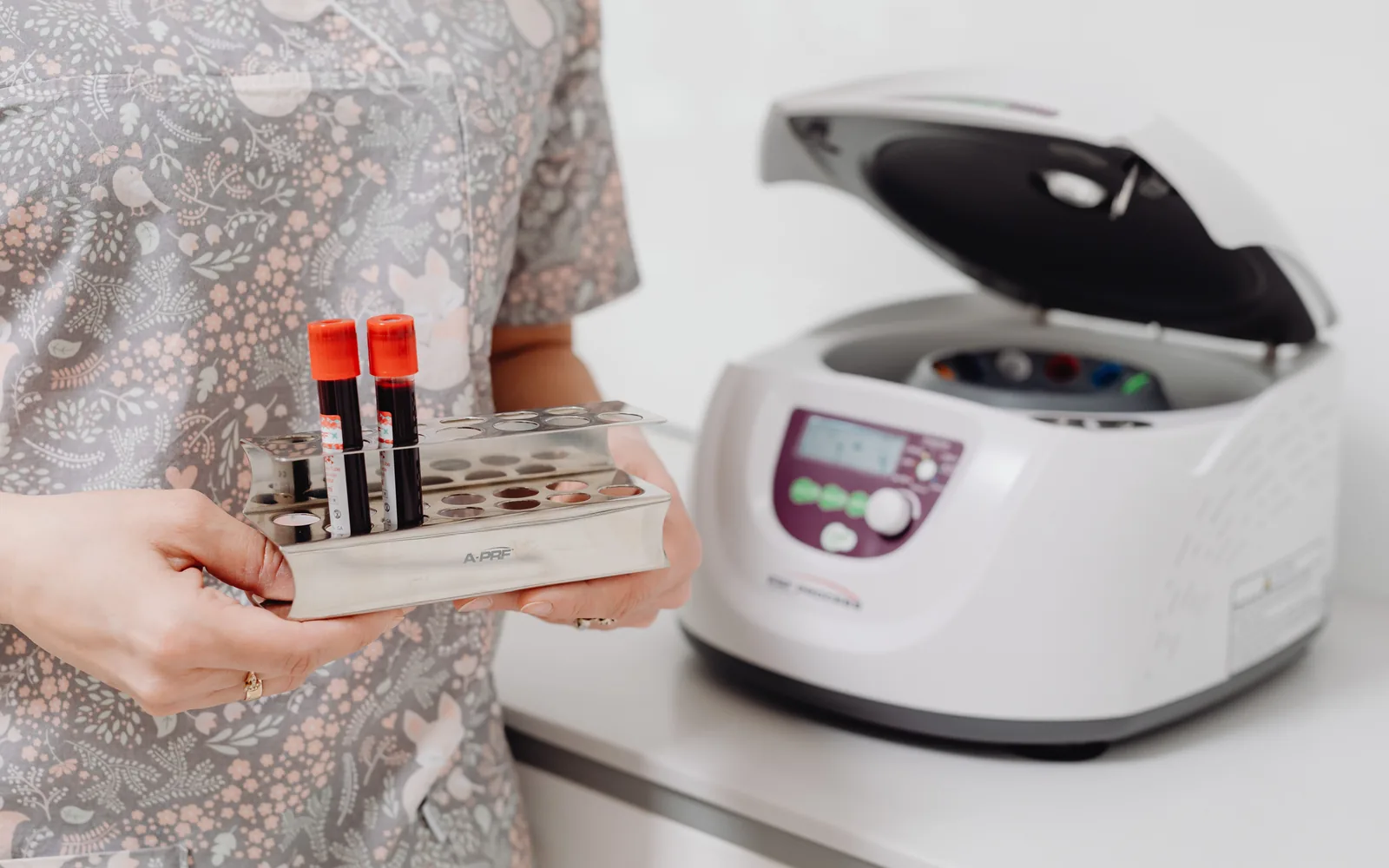
Platelet-Rich Plasma (PRP) Therapy: We draw a small amount of your blood, concentrate the healing platelets and growth factors using advanced centrifugation, then inject this powerful biological concentrate directly into damaged tissues. PRP contains over 300 growth factors that stimulate tissue repair, reduce inflammation, and promote new blood vessel formation. Ideal for tendon injuries, arthritis, and ligament damage.
Exosome Therapy: Exosomes are small vesicles that cells release to signal to other cells, and they are studied for their effect on the local repair environment rather than as a replacement for tissue. This is a newer option with an early evidence base, and exosome products are not FDA-approved for the treatment of orthopedic or spinal conditions. That is stated plainly in the consultation so the decision is an informed one, and PRP or shockwave is often the better-established place to start.
Shockwave Therapy: Focused acoustic pressure waves are applied through the skin to a painful tendon or fascia, with no needle, no incision and no anesthetic. It is used most often for plantar fasciitis, Achilles and patellar tendinopathy and tennis or golfer's elbow, and is delivered over a short series of office sessions. Treatment is uncomfortable while the head is over the sore spot and most people drive themselves home afterwards.
Image-Guided Precision Delivery: All regenerative injections at Gables Pain are performed under ultrasound or fluoroscopic guidance to ensure accurate placement exactly where healing is needed. This precision maximizes treatment effectiveness and minimizes discomfort, distinguishing our approach from blind injection techniques.
Important Note About Recovery Timeline
Important Note: Regenerative medicine works with your body's natural healing timeline. Unlike a corticosteroid injection that provides rapid but temporary relief, regenerative treatments require patience as actual tissue repair occurs. Results vary based on age, condition severity, overall health, and adherence to post-treatment protocols. Most patients report significant improvement, though complete elimination of all symptoms may not be realistic in advanced degenerative conditions.
Common Questions About Regenerative Medicine
How is regenerative medicine different from cortisone injections?
Corticosteroid (cortisone) injections provide rapid but temporary pain relief by reducing inflammation, but they don't heal damaged tissue and may actually weaken tendons and cartilage over time with repeated use. Regenerative treatments such as PRP work more slowly and are aimed at the repair environment in the damaged structure rather than at the inflammation alone. Where cortisone typically helps for six to twelve weeks, patients who respond to a regenerative course often hold that improvement considerably longer. The trade-off is that the benefit is not immediate and not everyone gets one.
Does regenerative medicine hurt? What is the recovery like?
The injection itself is performed with local anesthesia and most patients describe it as uncomfortable but tolerable, similar to other injections. Because regenerative treatments stimulate an active healing response, you may experience increased soreness, stiffness, and swelling at the treatment site for 2-5 days—this is actually a sign the therapy is working. We recommend ice, gentle movement, and acetaminophen (avoiding NSAIDs which can interfere with healing). Unlike surgery, there's no extensive downtime—most people can return to desk work the next day, though we recommend avoiding strenuous activity for 1-2 weeks to allow the healing process to begin.
Am I a good candidate for PRP or shockwave therapy?
The people who do best are those with musculoskeletal pain who have not responded adequately to conservative treatment such as physical therapy, medication or conventional injections, and who want to avoid or delay surgery. Regenerative medicine works best for mild to moderate tissue damage—conditions like early to moderate arthritis, partial tendon tears, ligament sprains, and degenerative disc disease. Factors that improve success include being a non-smoker, maintaining healthy body weight, and having realistic expectations. Very advanced conditions with complete tissue destruction (bone-on-bone arthritis, complete tendon ruptures) may still benefit but often require multiple treatments or may ultimately need surgical intervention. We'll perform a thorough evaluation to determine if you're a good candidate.
How many treatments will I need and when will I see results?
Most patients begin noticing improvement within 4-8 weeks, with continued enhancement over 3-6 months as tissue regenerates. The number of treatments varies by condition: simpler problems like tennis elbow may respond to a single PRP injection, while moderate knee arthritis might require 2-3 treatments spaced 4-6 weeks apart. Shockwave therapy is usually given as a short series of sessions a week or so apart. Published response rates vary widely between studies, preparations and conditions, so Dr. Steinberger will give you the figures that apply to your diagnosis rather than a single headline number. We'll discuss a personalized treatment plan during your consultation and monitor your progress to determine if additional sessions would be beneficial.
Is regenerative medicine covered by insurance?
Gables Pain does accept insurance, but most carriers still classify PRP and exosome therapy as experimental or investigational and do not cover them, so those treatments are usually out of pocket. Shockwave coverage varies by plan and diagnosis. However, the cost of regenerative treatment is often significantly less than surgery when you factor in surgical fees, anesthesia, facility costs, and lost work time during extended recovery. Many patients view it as a worthwhile investment to avoid surgery and its associated risks. At Gables Pain, we provide transparent pricing and can discuss payment options during your consultation. Some HSA and FSA accounts can be used for these treatments. We'll also provide documentation if you wish to submit a claim to your insurance, though approval is not guaranteed.
Related Services
Related
Joint Injections
Targeted injection therapies including corticosteroids, hyaluronic acid and platelet-rich plasma for painful, arthritic joints.
Related
Physical Therapy
Customized rehabilitation programs to restore strength, mobility, and function after injury or surgery.
Related
Pain Management
Comprehensive chronic pain treatment combining medications, interventional procedures, and lifestyle strategies.
Ready to Explore Regenerative Medicine?
Find out whether PRP, exosome therapy or shockwave is a reasonable option for your injury, and what it would involve. Call the Coral Gables office at (305) 204-5917 to arrange a consultation with Dr. Steinberger.
Book an Appointment